

What Are Medical Claims Management Solutions?
Medical claims management covers the processes involved in moving a healthcare claim from preparation and submission through payer response, follow-up, and payment reconciliation.
For healthcare providers, claims management can involve large volumes of patient and insurance information, payer requirements, claim status updates, rejections, denials, and payment records. When these activities become difficult to manage internally, healthcare claims outsourcing provides additional operational support.
A claims management partner can support specific parts of the process or provide broader assistance across the claims lifecycle, depending on the organization's requirements.
Medical Claims Processing Services
Healthcare claims processing involves several administrative activities that need to be completed accurately and consistently. Vision Sync Solutions can support healthcare organizations with claims-related processes based on their operational requirements.
Claims Adjudication Support
Claims adjudication is the process through which a payer reviews a claim and determines how it should be processed based on the applicable coverage and payment rules.
Healthcare claims outsourcing can provide administrative support around the adjudication process, including claim tracking, documentation, status management, and follow-up. The exact scope depends on the client's requirements and the responsibilities assigned to the outsourcing team.

Claims Preparation and Submission
Claims need to contain the required patient, provider, service, and insurance information before submission. Claims processing support can include reviewing information, identifying missing details, and preparing claims for submission through the appropriate channels.
Claims Validation and Quality Checks
Quality checks can help identify missing or inconsistent information before a claim moves further through the process. A structured review process can reduce avoidable processing issues and help teams identify recurring errors.
Claims Status Tracking
Once claims have been submitted, teams need visibility into their status. Claims support can include monitoring outstanding claims, documenting payer responses, and following up when additional action is required.
Rejected and Denied Claims Support
Rejected and denied claims require timely attention. Support teams can help identify the reason for a rejection or denial, organize the required information, and manage follow-up according to the client's established process.
Payment and Remittance Follow-Up
After claims are processed, payment information needs to be tracked and reconciled. Claims support can include monitoring payments, reviewing remittance information, and identifying items that require further action.
Claims Reconciliation
Claims reconciliation helps organizations compare submitted claims, payer responses, payments, and outstanding balances. Structured reconciliation can give internal teams better visibility into unresolved claims and payment activity.
Claims Reporting
Regular reporting can help healthcare organizations understand the status of their claims operations. Reports can cover areas such as claims submitted, claims pending, rejected or denied claims, outstanding follow-ups, and payment status.
Healthcare Claims Outsourcing: What Can You Delegate?
Not every healthcare organization needs to outsource its entire claims operation. Many choose to delegate specific processes where additional operational capacity is needed.
The right scope depends on the organization's claims volume, internal resources, systems, and operational priorities.
Medical Claims Processing for Different Healthcare Organizations
Claims requirements vary based on the type and size of a healthcare organization. Outsourced claims support can be structured around the workflows used by different healthcare businesses.
Hospitals and Health Systems
Large healthcare organizations may manage significant volumes of claims across departments, providers, procedures, and payers. Additional claims-processing support can help manage administrative workloads and follow-up activities.
Physician Practices
Physician practices often have smaller administrative teams handling multiple responsibilities. Outsourcing selected claims processes can provide additional operational capacity without requiring the practice to manage every function internally.
Specialty Clinics
Specialty healthcare organizations may have specific documentation, payer, and claims workflows. Claims support can be aligned with the processes used by the organization.
Healthcare Provider Groups
Multi-provider organizations can use centralized claims support to manage administrative workflows across locations and provider teams.
Home Healthcare Organizations
Home healthcare businesses manage claims alongside scheduling, documentation, patient information, and other administrative activities. Outsourced claims support can help manage the claims-related workload.
Growing Healthcare Organizations
As claim volumes increase, internal teams may need additional capacity. Outsourcing allows organizations to delegate defined processes while retaining control over the overall claims workflow.
Medical Claims Processing vs. Claims Adjudication
Medical claims processing and claims adjudication are related but different activities.
Claims processing
Claims adjudication
Claims processing generally refers to the administrative work involved in preparing, submitting, tracking, and managing claims.
Claims adjudication refers to the payer-side process of reviewing a claim and determining how it should be paid based on coverage, eligibility, policy rules, and other applicable criteria.
An outsourcing provider may support administrative activities surrounding claims adjudication, but the exact responsibilities should be clearly defined before outsourcing.
Understanding this distinction helps healthcare organizations choose the right type of claims processing company and establish clear responsibilities between the provider, outsourcing partner, and payer.
Common Medical Claims Challenges and How Outsourcing Helps
Managing claims internally can become difficult when teams are dealing with high volumes, manual processes, and multiple payer workflows.
Incomplete Claim Information
Missing or inconsistent information can create additional work and may result in a claim being rejected.
How outsourcing can helpHow outsourcing can help: A defined claims review process can identify missing information before submission and route issues for correction.
Claim Submission Errors
Manual data entry and inconsistent processes can create errors during claim preparation.
How outsourcing can helpHow outsourcing can help: Standardized workflows and quality checks can provide an additional layer of review before claims are submitted.
Rejected Claims
Rejected claims may require investigation and correction before they can move forward.
How outsourcing can helpHow outsourcing can help: Dedicated support can track rejected claims, document the reason, and manage the required follow-up.
Denied Claims
Denied claims can require additional documentation, review, or follow-up depending on the reason for denial.
How outsourcing can helpHow outsourcing can help: An outsourced team can support denial-related workflows and help maintain visibility into outstanding items.
Delayed Payer Responses
Claims teams may spend considerable time tracking claims that remain unresolved.
How outsourcing can helpHow outsourcing can help: Dedicated claims support can monitor outstanding claims and manage follow-up according to established processes.
High Administrative Workloads
Internal healthcare teams may have to balance claims work with other administrative responsibilities.
How outsourcing can helpHow outsourcing can help: Organizations can delegate defined claims processes to an external team and allow internal employees to focus on other priorities.
How Medical Claims Management Works
A structured claims workflow typically moves through several stages:
- Claim preparation
- Validation
- Submission
- Status tracking
- Payer review
- Rejection or denial follow-up
- Payment and reconciliation
- Reporting
The exact workflow varies by organization, payer requirements, systems, and the scope of outsourced services.
A clear process also makes it easier to establish responsibilities, monitor outstanding claims, and identify areas that need additional attention.
Medical Claims Management vs. In-House Operations
Healthcare organizations can manage claims entirely in-house, outsource specific processes, or use a combination of internal and external teams.
The right approach depends on claims volume, internal expertise, operational requirements, and the level of control the organization wants to maintain.
How Vision Sync Solutions Supports Healthcare Claims Management
Vision Sync Solutions provides BPO support that can be structured around the operational needs of healthcare organizations.
Dedicated Claims Workflows
Claims-related activities can be organized around defined processes, responsibilities, and quality checks.
Claims Tracking and Follow-Up
Support can include monitoring outstanding claims and managing follow-up activities according to established workflows.
Rejection and Denial Support
Teams can assist with claims that require additional review, documentation, correction, or follow-up.
Structured Quality Checks
Defined review processes can help identify missing or inconsistent information and maintain consistency across claims-related activities.
Reporting and Operational Visibility
Regular reporting can help healthcare organizations understand claims activity, outstanding work, and areas requiring attention.
Scalable Operational Support
Organizations can outsource selected claims functions based on their workload and operational requirements rather than moving the entire claims operation outside the business.
Support Within Existing Processes
The outsourcing model can be aligned with the client's existing workflows, responsibilities, and reporting requirements.
What Should You Outsource to a Medical Claims Processing Company?
The right functions to outsource depend on where your internal team spends the most time and where additional operational support is needed.
Consider outsourcing claims activities when:

Before selecting a provider, define the specific activities you want to outsource. This could include claims preparation, submission, status tracking, denial support, payment follow-up, reconciliation, reporting, or a combination of these functions.
What to Look for in a Claims Processing Company
A healthcare claims outsourcing partner should fit your existing processes and operational requirements. Consider the following when evaluating providers:
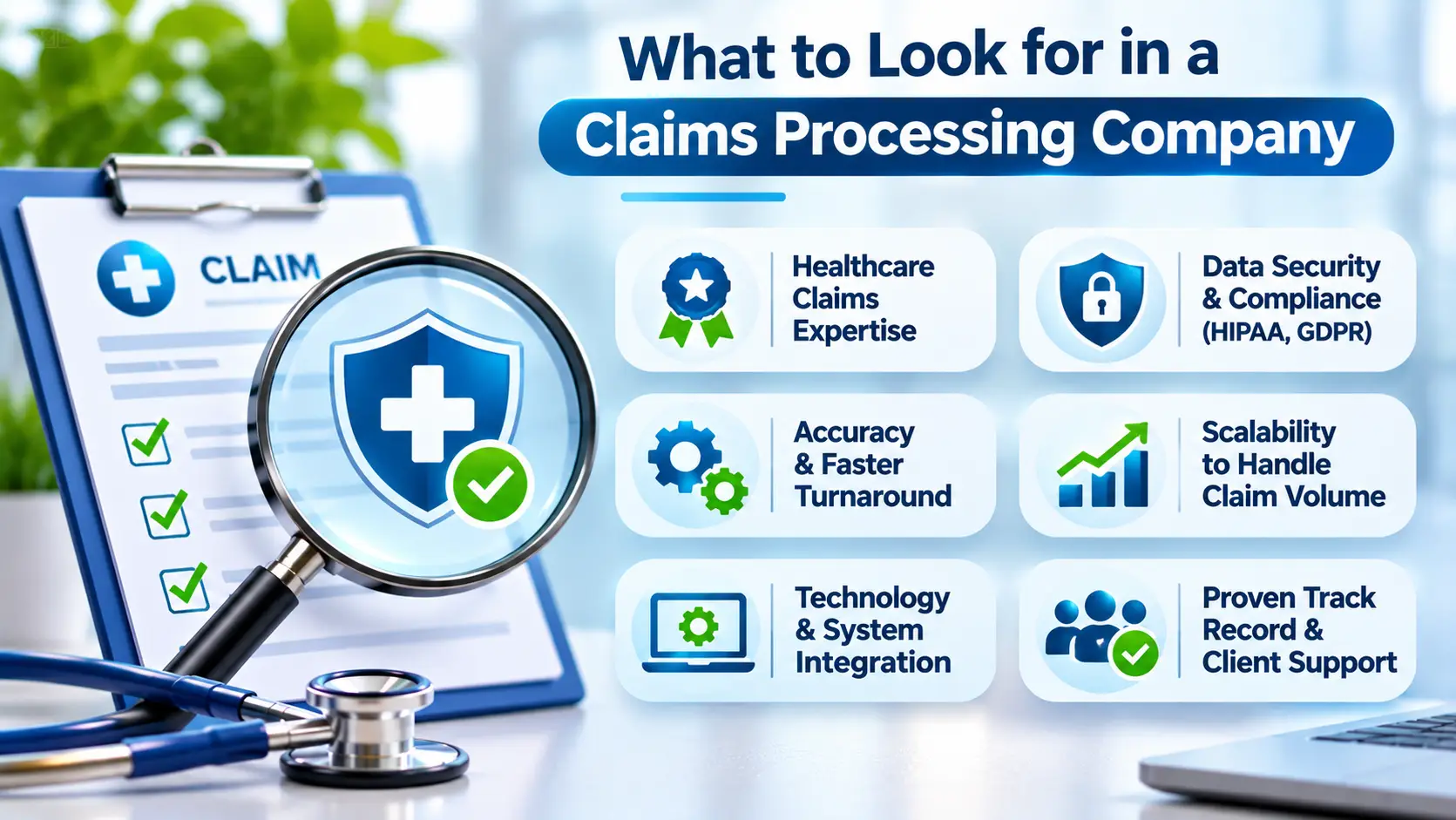
Healthcare claims experience
Look for a provider that understands the administrative requirements involved in healthcare claims operations.
Defined workflows
Ask how claims are processed, reviewed, tracked, and escalated.
Quality control
Understand what checks are performed before and after claims are processed.
Reporting
Establish what information will be reported, how frequently, and in what format.
Scalability
Determine whether the team can adjust to changes in claims volume.
Data security
Understand how patient and claims information is handled and protected within the provider's processes.
Clear responsibilities
Define which activities remain with your internal team, which are handled by the outsourcing provider, and which require payer or client action.
Frequently Asked Questions

Get Support With Healthcare Claims Management
Managing medical claims requires consistent processes, timely follow-up, and clear visibility into outstanding work. Whether you need support with claims processing, tracking, denial workflows, reconciliation, or reporting, the right outsourcing model can be structured around your operational requirements.
Talk to Vision Sync Solutions about your healthcare claims management needs.
Contact Vision Sync Solutions